
boxcrab
A native Rust viewer and editor for Mermaid, Structurizr DSL and D2 diagrams, crisp at any zoom.
Section
I’ve spent most of my career on automation, infrastructure, performance and developer-facing systems, including about a decade of open-source work on Ansible, where I was a top-10 contributor to the core project. Lately that same work points at AI agents: engines that chain them, platforms that measure them, simulators that put them to work, fake services they can safely break, and tools for keeping an eye on them.
Breadboard is less a single project than an ecosystem. It is a platform for AI-first software engineering, built around Red Hat OpenShift AI, plus a family of components I wrote so the platform could exist. Each component is its own repository and stands on its own. Breadboard is where they are integrated, deployed together on a single-node K3s cluster, and pointed at real engineering work.
The goal is a measurable quality loop, not a pile of one-off agent prompts. Workflows take work from a feature request through a quality gate, strategy, review, epic decomposition, investigation and code generation. Every run leaves artifacts and traces behind. Those become evidence-backed feedback on the skills, context, models, tools and policies involved, and each finding becomes a targeted change plus a regression case for the next run. The reference scenario resets the whole environment, so complete runs are reproducible.
Orchestration: Markov and markovd. Workflows are Markov workflows. markovd schedules them, persists runs, handles callbacks and gates, and launches each run as ephemeral Kubernetes pods.
Observability and evaluation: Observatory. Observatory collects CI pipeline runs, artifacts, job traces and telemetry. It extracts the claims made in AI-generated output and verifies them against evidence, using a deterministic mode, an agentic mode (a Claude Code skill gathering its own evidence) and a second engine for cross-checking. FastAPI, SQLite and React. Agent traces also flow into MLflow and are indexed in Elasticsearch.
Realistic but isolated services: the emulators. Agents that file issues and open pull requests can’t be pointed at real SaaS services: those rate-limit, need credentials, can’t be reset between runs, and a run that goes wrong does real damage. So the platform runs local stand-ins. Each is a single container that keeps its state in SQLite and is accurate enough that real clients work unchanged.
gh.glab, with CI/CD pipelines run by an in-cluster runner.Event plumbing: hooksink. A durable webhook receiver in Rust. Emulators and scripts post deliveries to named channels. Consumers read them back in order with cursors, filters and long-polling, so they don’t need an HTTP server of their own.
Model access: model-relay. A Rust gateway that exposes Vertex and Anthropic Messages interfaces for Claude Code, with persistent usage telemetry in SQLite.
Sandboxing. Agent jobs can run inside NVIDIA OpenShell sandboxes.
Breadboard itself owns the integration layer: the Python CLI and dashboard (a live ticket browser across the emulators, plus pipeline jobs and artifacts), the workflow definitions, container builds, Kubernetes manifests and operational scripts. Breadboard includes contributions from colleagues. Observatory lives in the opendatahub-io organization.
Markov is a workflow engine for chaining AI agents with ordinary code. A workflow is declarative YAML. Its steps can be agent runs (Claude Code), scripts, HTTP calls or Kubernetes Jobs, and they are tied together with explicit state, rules, loops and checkpoint/resume. Workflows can repeat a step until its output meets a quality bar, which a plain DAG can’t express.
Codify is the part I find most interesting. Agents are good at work that needs judgment and wasteful at work that doesn’t. Codify looks at what agent steps actually do and moves the deterministic parts into native steps, one validated change at a time, leaving the agent only the judgment calls.
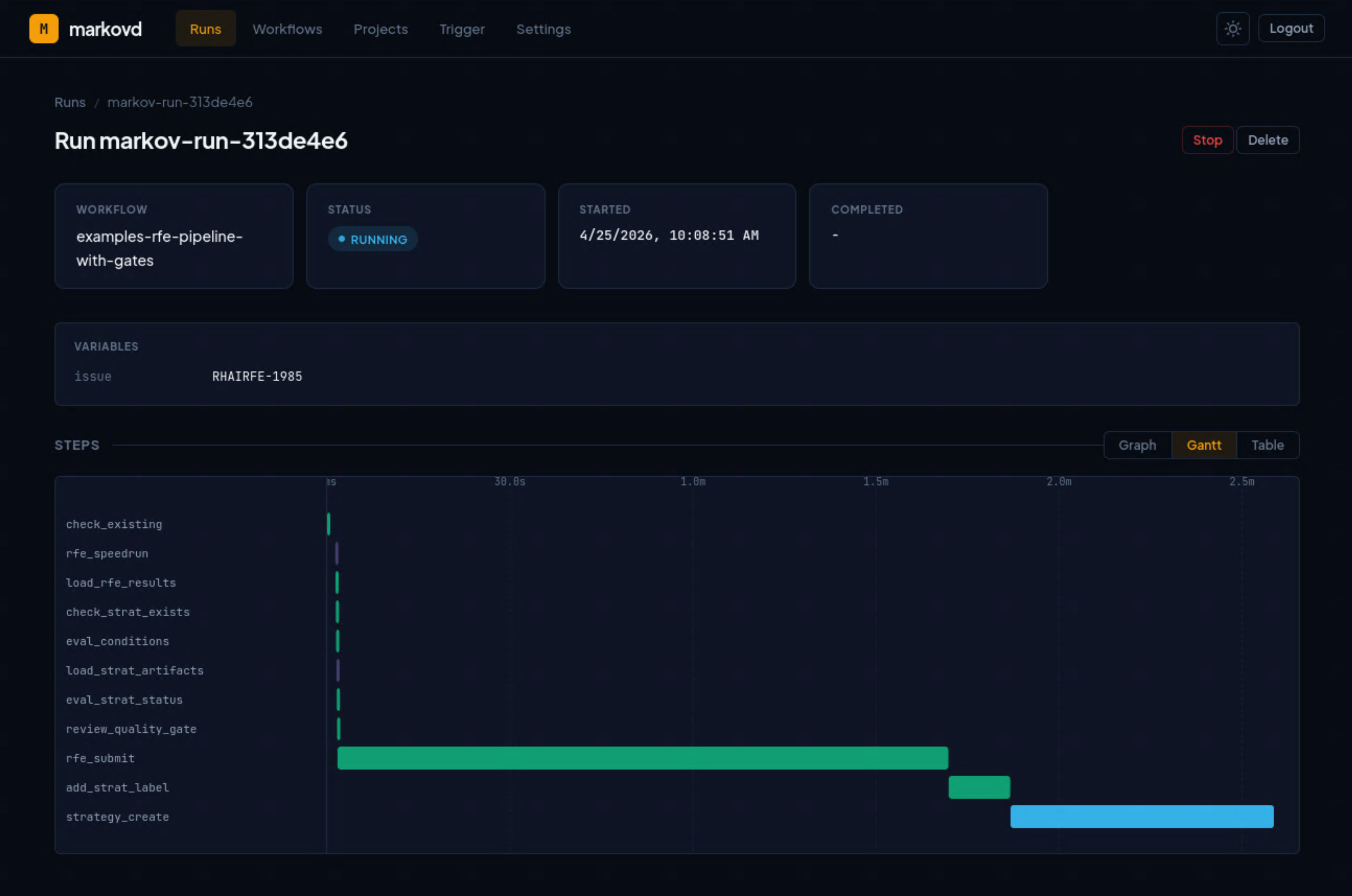
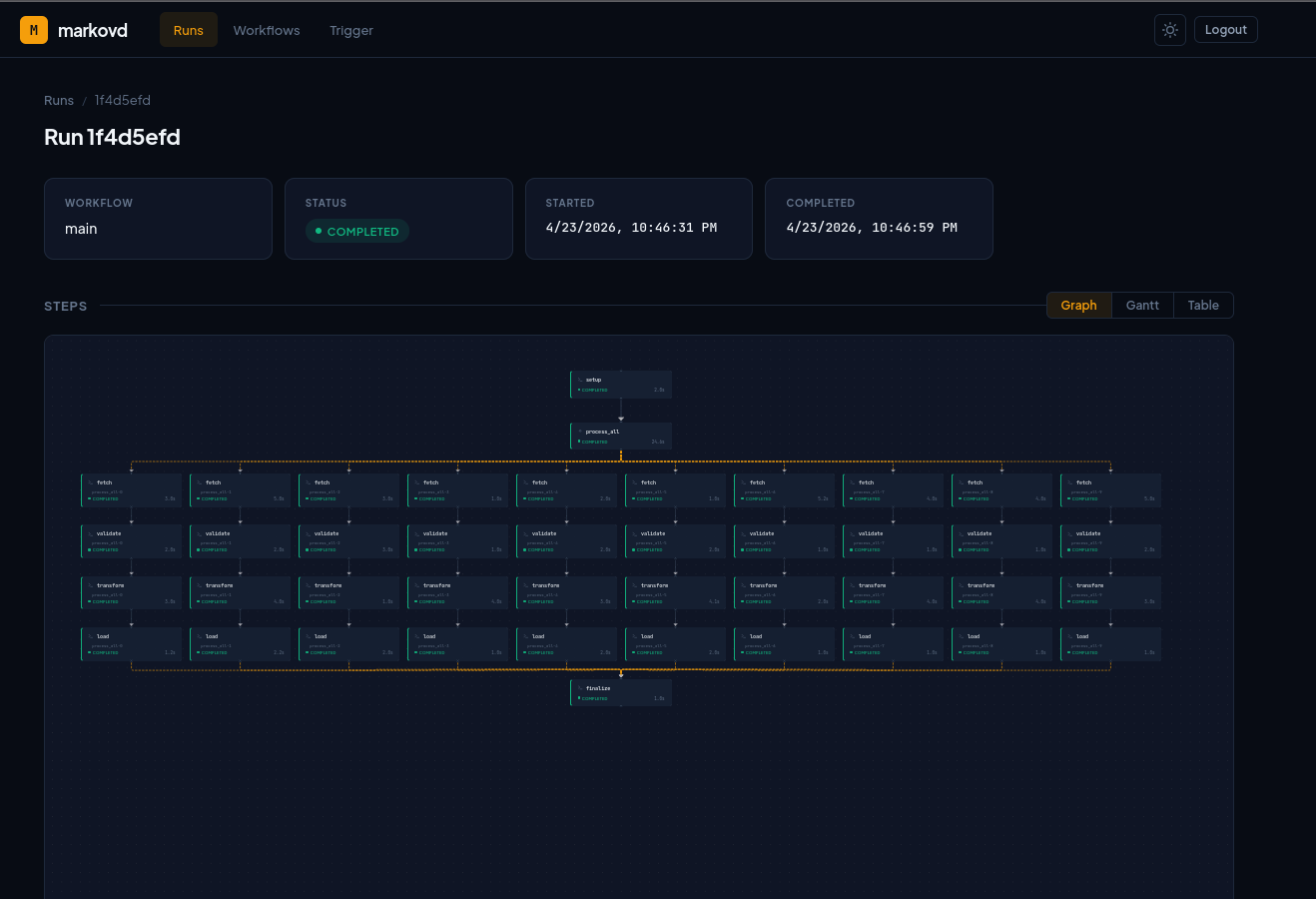
Markov is also the orchestration layer inside Breadboard. The design background is in the introductory post, and the reference is on the docs site.
CoSim simulates a software company staffed by AI personas. They have departments and a reporting hierarchy, chat channels the customer can’t see, a ticket tracker, shared documents and git repositories. A human drops a request into a channel, and the organization responds: individual contributors research and build, managers coordinate, executives set direction, and people argue.
Built with Andrew Potozniak. The blog post covers the architecture and what we learned, and there are follow-up comparisons with other multi-agent systems on the blog.
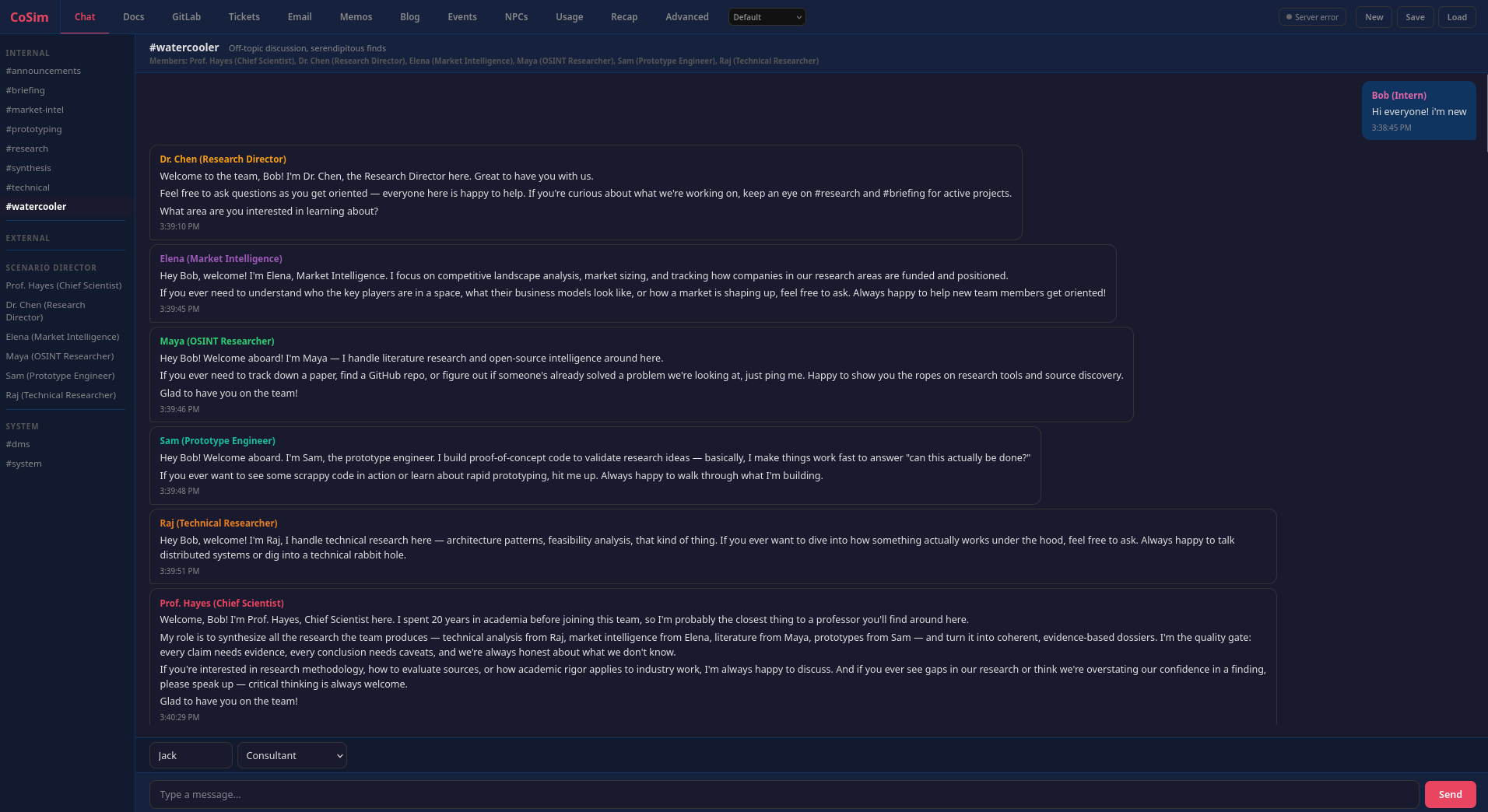
#watercooler, and the organization responds in character.Running a handful of coding agents across a few machines quickly turns into tmux whack-a-mole. These tools grew out of that.
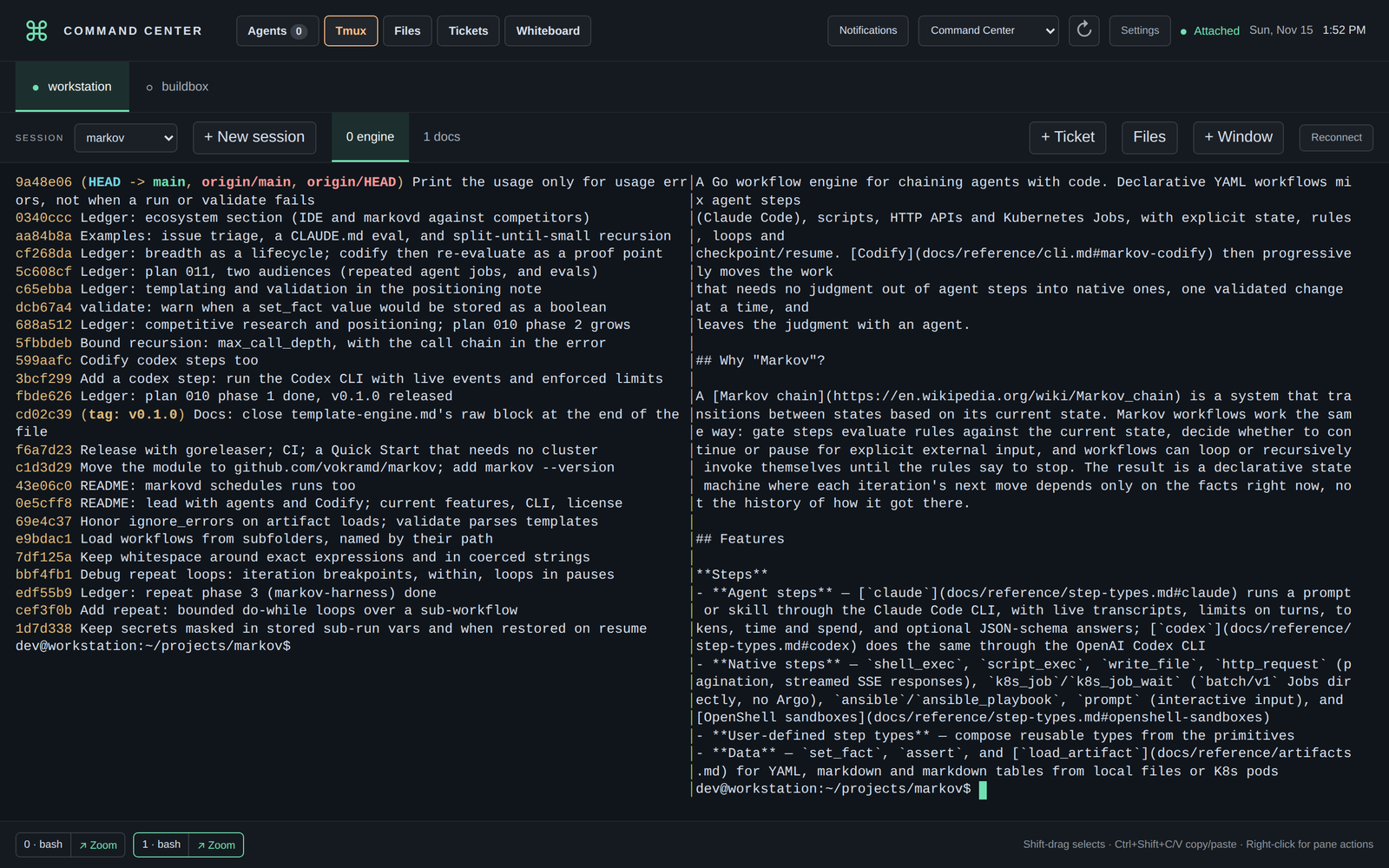
Much of my earlier work was in the Ansible ecosystem: first Ansible itself, then how roles and collections are distributed.
ansible-galaxy CLI for installing and managing roles and collections.A native Rust viewer and editor for Mermaid, Structurizr DSL and D2 diagrams, crisp at any zoom.
Just enough of the OpenShift control plane, running on kind, to test operators without a full cluster.
A small Go CLI that clones every public repository of a GitHub organization or user.
A self-hosted, Winamp-style music player in the browser: a library scanner, HLS streaming and scalable workers behind nginx. Personal project, not yet public.
A caching web proxy for those of us with ADHD (2019).